The Maeving RM2 May Be the Eco Triumph of the 21st Century
The world needs electric motorcycles that look as sexy as their gas-burning counterparts and this UK import fits that remit perfectly
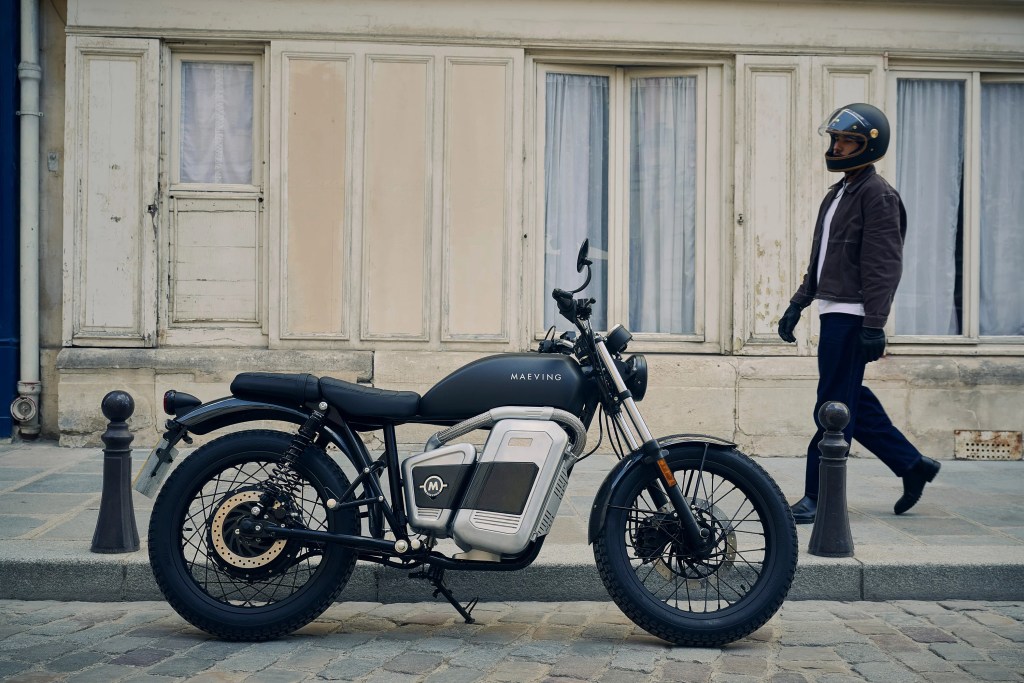
There’s a clever visual trick Maeving pulls off with this bike that you’re unlikely to spy even on a second read. Hint: this bike runs on electrons, not gasoline. But a motorcycle sans exhaust pipes can look like a cat without a tail. There’s something your brain says is missing. So Maeving, founded just five years ago, snakes its high-voltage wiring and other components through an overtly bling-y braided metal housing across the RM2’s midsection. Yes, they could have hidden that wiring entirely, but instead Maeving gives the rider a throwback “tell,” connecting their bike to motorcycling’s 140 years of celebrating what is raw and overtly analogue.
Seb Inglis-Jones, Maeving’s co-founder, notes that the $10,995 RM2, the company’s fourth production bike, has been produced because existing customers wanted a longer bike that could carry two passengers or a single rider plus cargo. Prior Maeving iterations featured a throwback scooped saddle that is exceptionally style-forward—but not so comfy over rough pavement, and also forces a more forward riding position. “At events and in our showrooms,” Inglis-Jones says, “people said they loved everything about the RM1S but would only consider purchasing if we offered a second seat.”
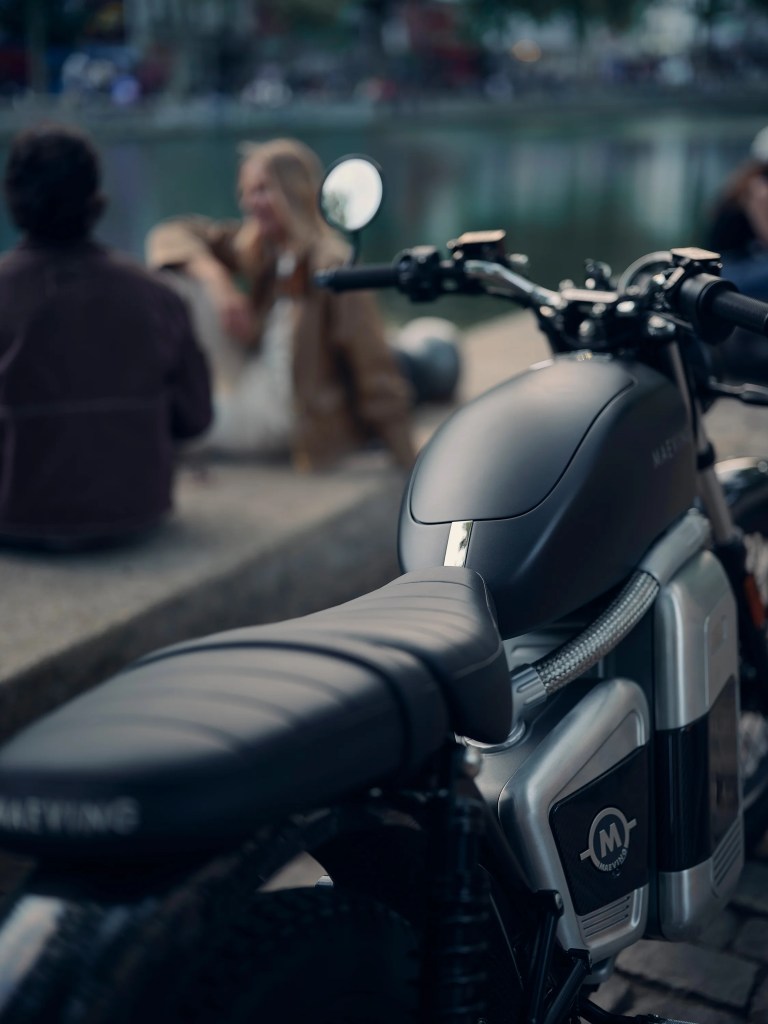
Since there’s no actual fuel tank on a Maeving, that bullet-shaped box in front of the rider provides a small storage space that can hold gloves or a second layer of clothing like a rain shell, but with the RM2, there’s now room to add a 30-liter tail box, which is commodious enough for helmet stowage.
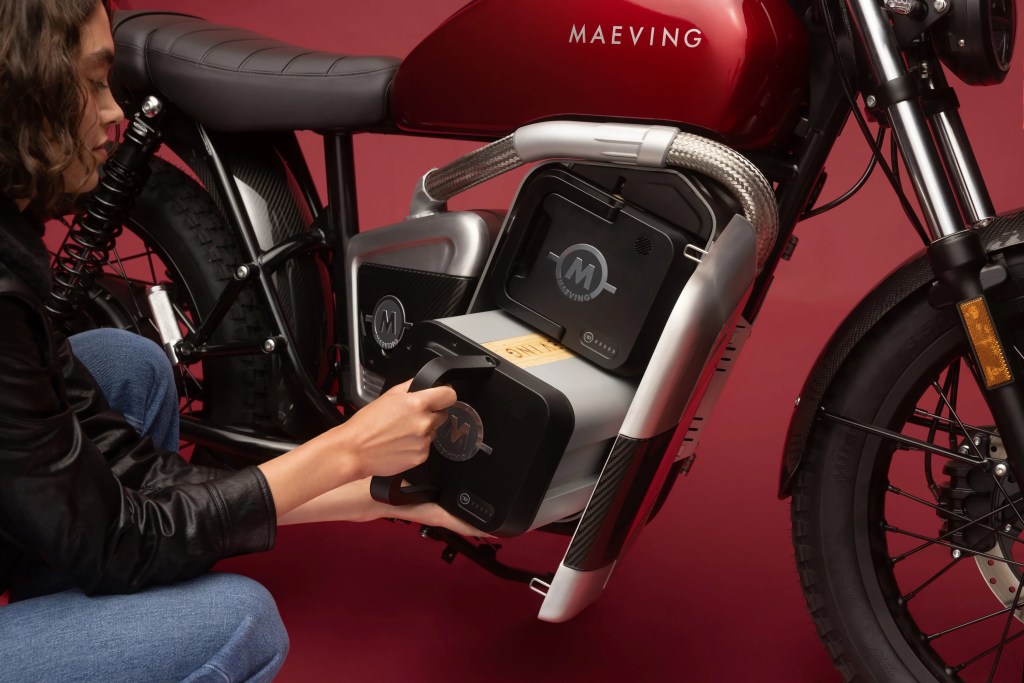
Crucially the RM2, like other Maeving models, is powered by dual removable 2.73 kWh batteries. That lets you park and carry the batteries into your home or office and charge them there. (Topping up from 10 to 80 percent takes about three hours.) But, wisely, Maeving also offers the bike with a Level 2-style charge receptacle, so you can also charge wherever there are EV ports.
The RM2 is more than an RM1 with a different seat. Maeving lengthened the frame and reinforced it, and changed the shock kinematics both to support the weight of a second rider plus the weight of a now somewhat heavier bike. But at 320 pounds, the Maeving isn’t heavy for what it would compete against in the gas market, such as smaller Triumphs and street-focused Hondas.
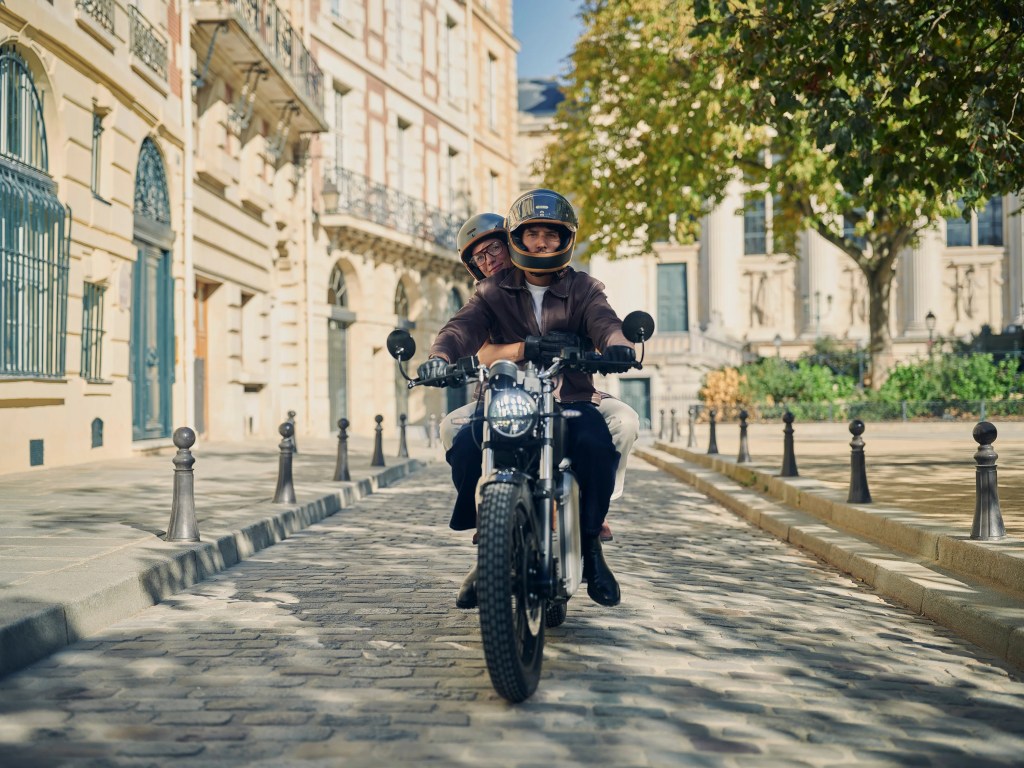
Visually, the bike looks like an urban commuter, which is exactly the market Inglis-Jones says they’re chasing. He notes that by moving the rider into a more upright position, farther forward on the bike, they’ll gain steering agility, the better for transiting crowded city traffic. But the RM2 also looks more purposeful and less nostalgic. It has just enough bona-fides to back up its visuals, too. No, 15 horsepower doesn’t sound especially potent, but 193 foot-pounds of instant torque is definitely more than any small gas bike offers, so acceleration isn’t an issue. The top speed of 70 miles per hour, with a range of 80 miles, enables a mixed commute on byways and highways, though you’d likely want to limit the latter, since the Maeving offers no wind protection and at its highest output, you’re going to lose range a lot faster.
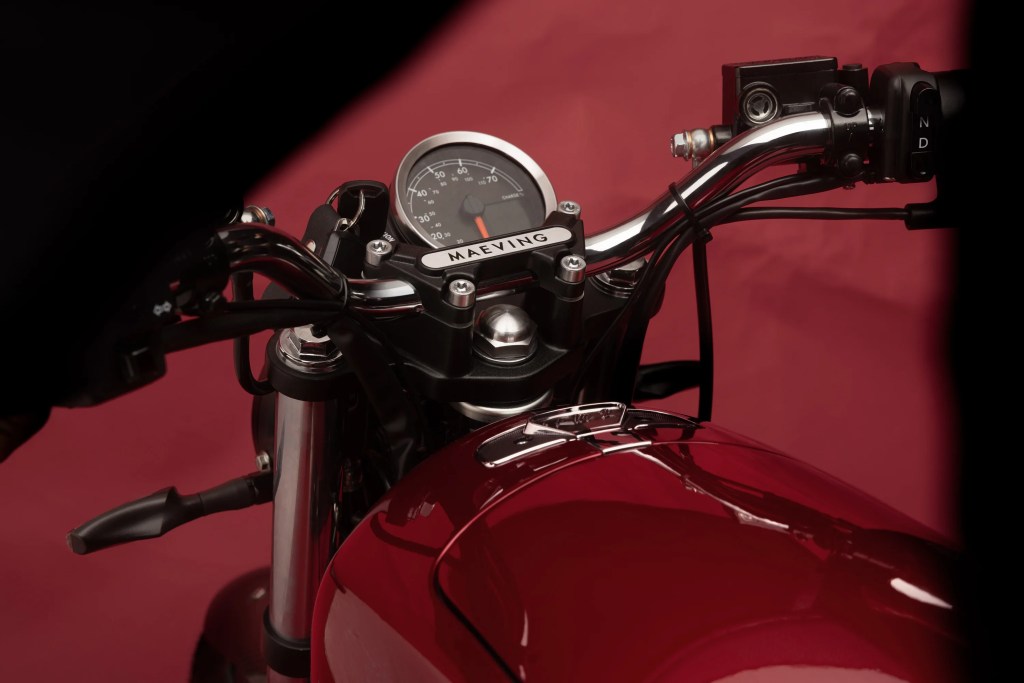
Inglis-Jones also touts that the RM2 isn’t really meant to compete head-on with mass-produced bikes from Japan or India. He boasts that Maevings are “…hand-built in the UK using high-quality components and finishes, which we believe makes them look and feel special.”
Further, because the Maeving doesn’t require shifting, it’s a lot easier for novice riders to adjust to. Though, Maeving also set up rear braking via your right foot, not on the handlebar, since foot-actuated rear braking is the norm in the U.S. and riders transitioning from gas bikes can find the adjustment odd otherwise. It also utilizes proportional braking, meaning the front and rear disc actuation is linked, which is considered safer, to prevent skidding and to increase stopping power.
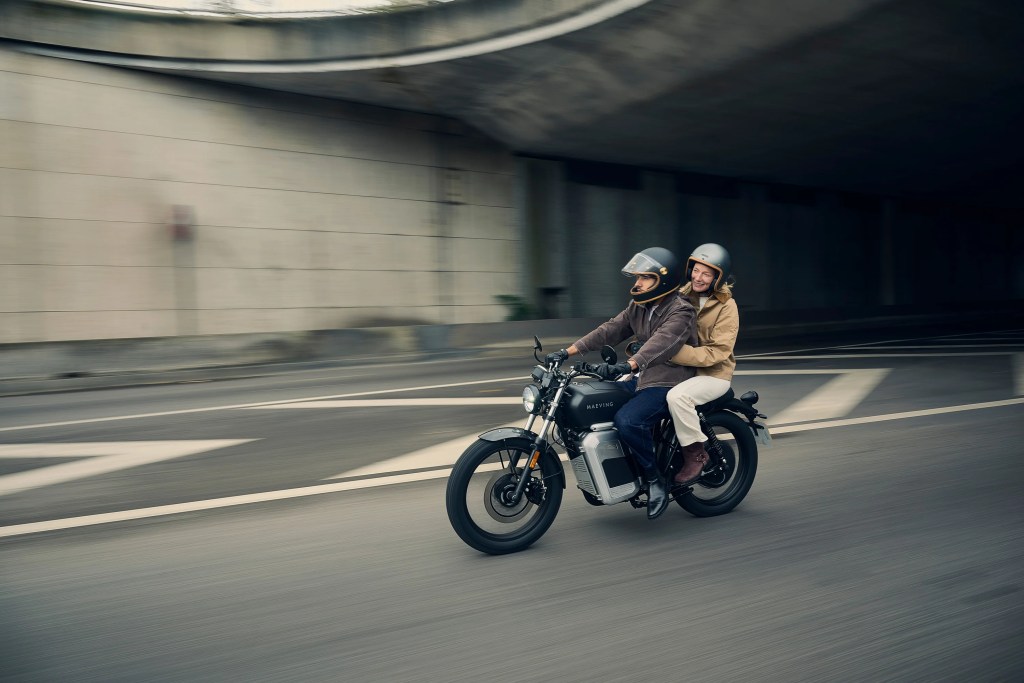
One interesting tech aspect of the Maeving is that it uses a rear hub motor, in part to reduce the need to maintain a chain-driven powertrain. Chains also introduce noise, and while Inglis-Jones knows some traditional riders may miss the cacophony of an engine, he notes (rightly, from our experience testing both gas and electric motorcycles), that a loud bike adds to the stress load of riding. The engine can drown out your ability to hear adjacent traffic, and it’s correct that electrification offers better acceleration. Plus, if you’ve ridden an electric bike in stop-and-go city traffic, you know there’s no heat buildup from sitting astride a gas engine.
“Ultimately, it comes down to rider preference: some people love the noise, vibration, heat and satisfaction of shifting gears,” Inglis-Jones says, adding that he enjoys those aspects, too, on gas bikes he owns. “Our bikes are not designed to replace touring, sports or off-road gas bikes. They aren’t suitable for those use cases. Instead, they provide an alternative for riders who value the peace and quiet of an electric motor, better acceleration, automatic transmission (particularly useful in city stop-start traffic) and zero tailpipe emissions.”










Latest Comment