Milano Design Award 2026: Winning Installations
The Fuorisalone Award 2026 leaves us with a sharp portrait of Milan Design Week
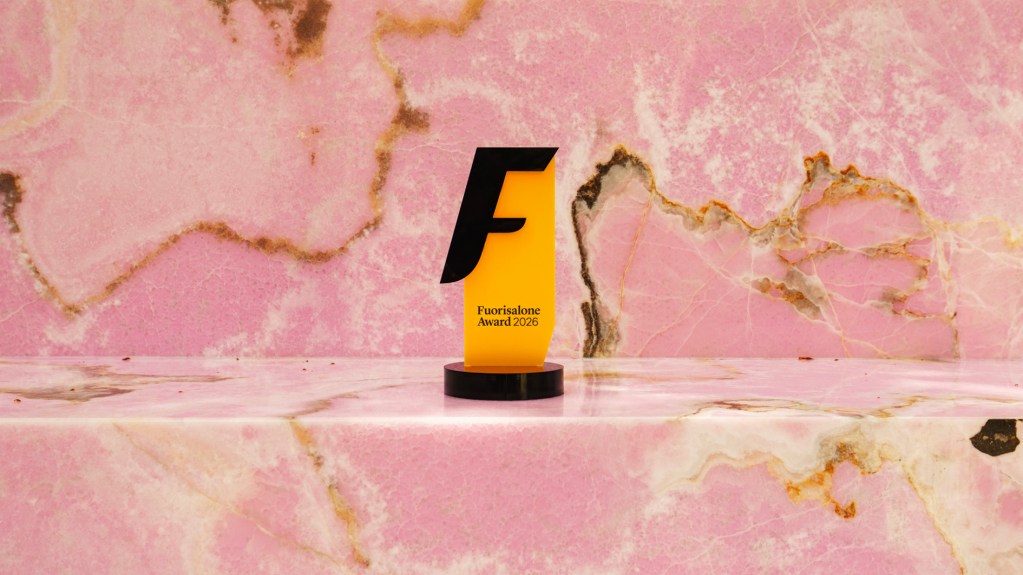
There’s a moment during Milan Design Week when the previews of the first days give way to journalists’ recommendations, friends’ suggestions and insider guides. One of these is the shortlist of candidates for the Fuorisalone Award. Promoted by Studiolabo, which also runs the reference website www.fuorisalone.it, it was founded in 2011 as the Milano Design Award and has since become one of the most reliable indicators of the spirit of the installations that take over the city.
It doesn’t reward objects or designers in the abstract, but the initiatives open to the public that best capture what it means, today, to do design in a city. This year’s winners span three continents, touching on automotive, fashion, craft, research and design policy. In short, a synthesis that accurately photographs the world’s most important design week.
This edition once again featured a public award—won by Škoda Auto’s playful, colorful installation—alongside the mentions from the international jury, the media partners award and the special ”Being Project” prize, this year’s theme according to Studiolabo. Here are all the winners.
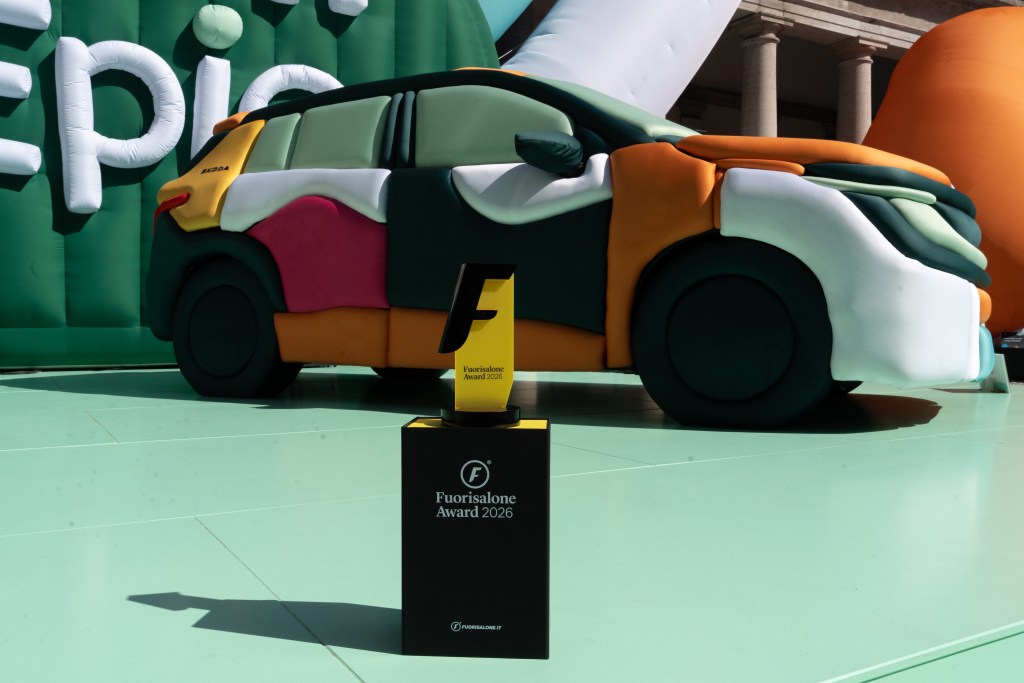
People’s Choice Award: ”Ooooh, that’s EpiQ!”, Škoda Auto
The courtyard of Palazzo del Senato is by now a Fuorisalone classic. Škoda Auto occupied it with an installation designed by Spanish digital artist Ricardo Orts, founder of ULISES Studio and one of Forbes’ Top 100 Best Creatives in 2024. The theme follows the campaign for the Epiq model: malleable matter, form that never quite closes. Soft sculptural volumes alternated with an interactive digital dome, with rest zones and creative activations that changed program every day. The result was a space as rewarding to inhabit as it was to photograph and share.
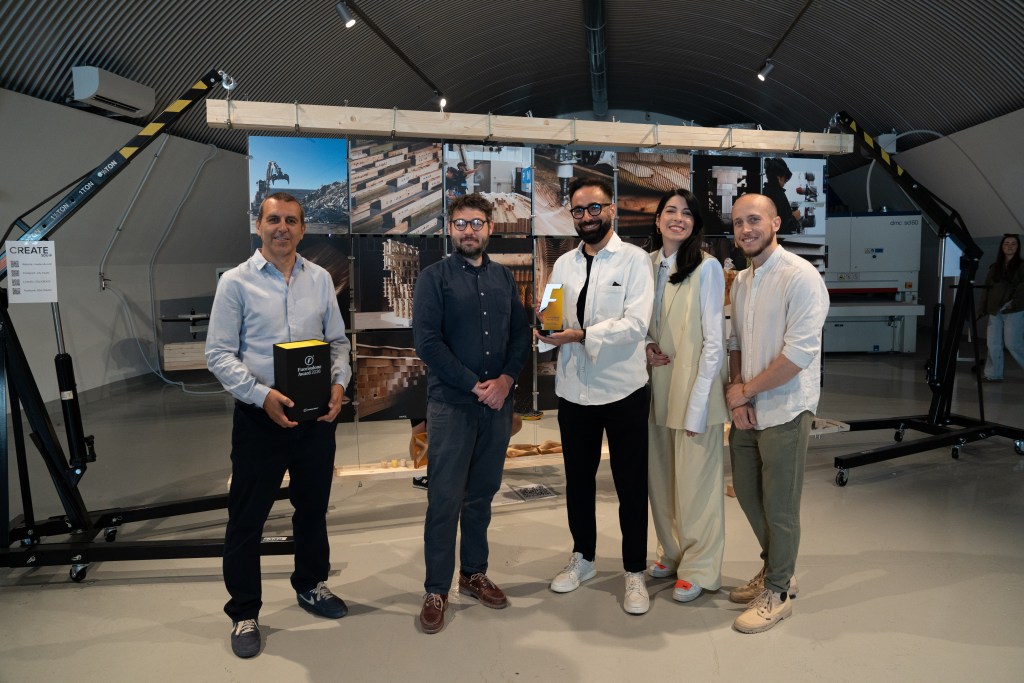
Special Mention Sustainability & Research: RE:PROGRAMMING WOOD, SDU CREATE at the University of Southern Denmark
The research presented by SDU CREATE, a center at the University of Southern Denmark, confronts one of contemporary architecture’s least discussed contradictions: timber is renewable, but the way we use it is not. The project demonstrates, through full-scale prototypes, how reclaimed wood, off-cuts and production waste can re-enter structural cycles through data-driven design and robotic fabrication. The installation curated by Zarcola Architetti made the quantity of saved material visible by suspending the elements via hoists, counterweighted with equivalent amounts of commercial timber. And everything will be returnable to the market once the event closes.
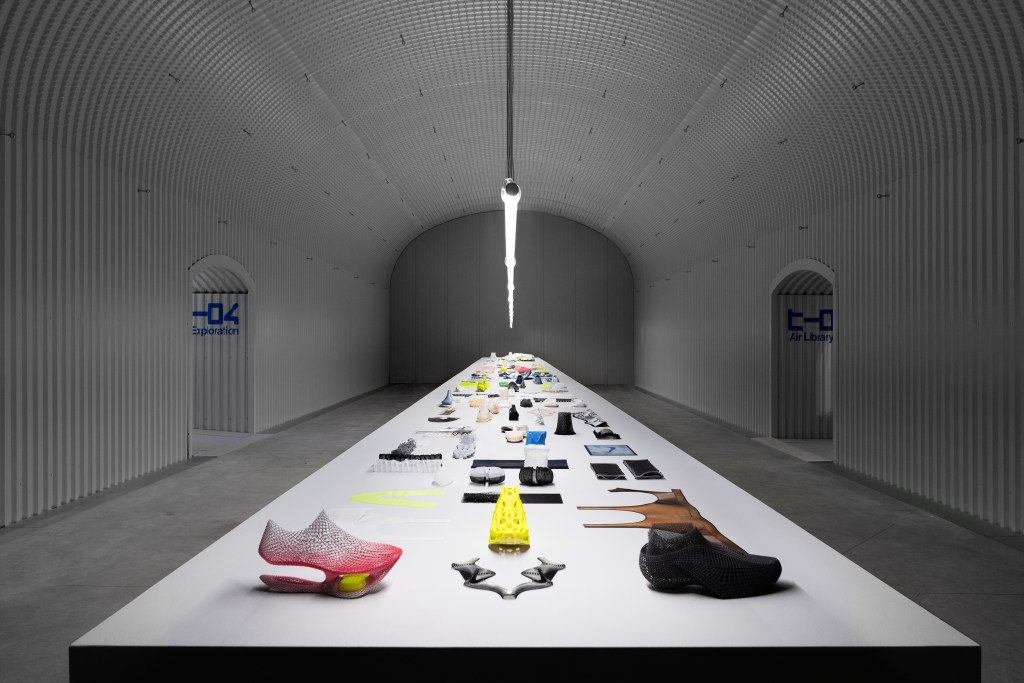
Special Mention Technology & Innovation: NikeAir_Lab, Nike x Dropcity
Nike chose Dropcity as its partner for a show that begins with an archive and arrives at nearly one hundred previously unseen prototypes. The thread running through it is air—not as metaphor, but as material in its own right: from inventor Frank Rudy’s original obsession to the most recent innovations including Nike Air Liquid Max, FlyWeb, Radical AirFlow and Therma-FIT Air Milano. Working machinery, a curated selection of reading material, daily talks and hands-on workshops turned the space into an open laboratory. The decision to make the process visible, not just the product, made this one of the most-visited installations of the week. A final touch: several of the machines on display were donated by Nike to Dropcity’s workshops.
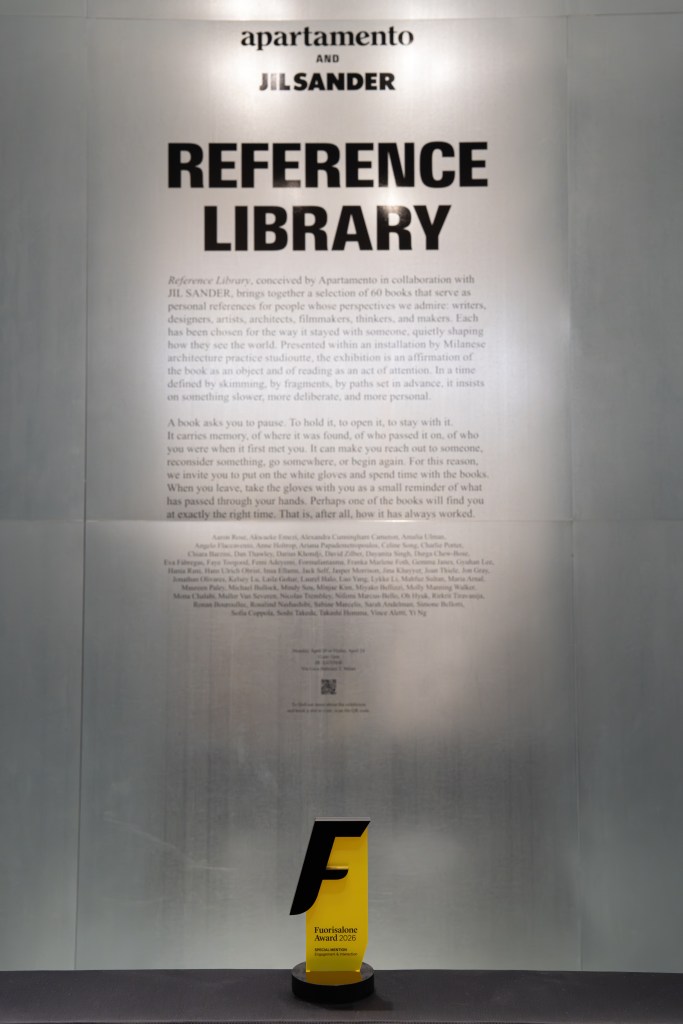
Special Mention Engagement & Interaction: Jil Sander. Reference Library
Sixty books, sixty people with a recognisable point of view — writers, architects, designers, filmmakers — each of whom chose a title that says something about who they are. The exhibition, conceived by Apartamento in collaboration with Jil Sander and installed by Milan-based studio studioutte at the brand’s showroom in the city center, worked as a small ritual: reservation, white gloves, silence. The books were open, to be handled. The gloves stayed with the visitor. The installation—chrome lecterns, warm light, a mirrored wall—didn’t ask you to take a look; it asked you to stop. In a week built on speed and FOMO, that was not a small thing.
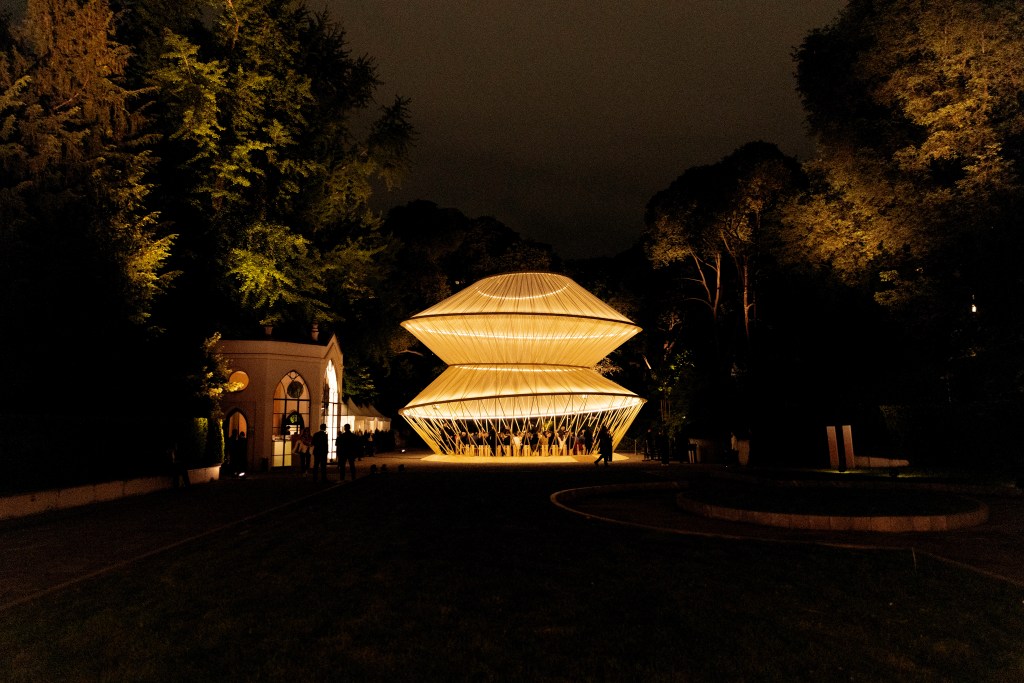
Special Mention Media Partners: “When Apricots Blossom,” Uzbekistan Art and Culture Development Foundation
Conceived by Gayane Umerova, President of the Uzbekistan Art and Culture Development Foundation, the exhibition held at Palazzo Citterio highlighted Karakalpakstan, a region that lost the Aral Sea due to irrigation projects causing an ecological and social collapse, and now works to preserve its own cultural identity. Curated by architect Kulapat Yantrasast, the show is structured around textiles, bread and dwelling, with works commissioned from twelve international designers including Bethan Laura Wood, Fernando Laposse and Nifemi Marcus-Bello, made in close collaboration with Uzbek craftspeople. The film Where The Water Ends, by Manuel Correa and Marina Otero Verzier, provided the most powerful narrative key: memory resisting climate collapse. In the palace courtyard, a monumental metal sculpture—one of the true highlights of the week—served as a gathering place for meetings and workshops, inspired by the yurt, the circular tent traditionally used by the region’s communities to come together.
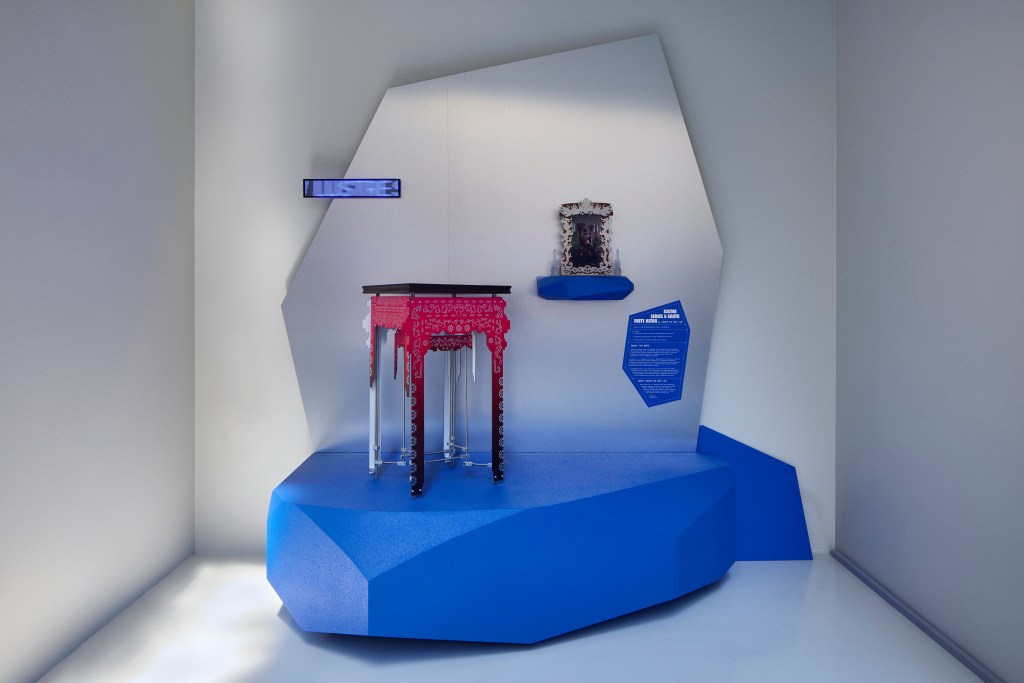
Special Mention Being Project: “Prototype Island,” DesignSingapore Council
The DesignSingapore Council came to Milan with a precise question: what does it mean to design a nation? Prototype Island, curated by Singaporean designer Hunn Wai with Eian Siew, and with Maria Cristina Didero as Global Perspectives Advisor, proposed Singapore as a case study of a country that continuously rewrites itself through design. It was an argument at urban and political scale, in which the prototype is not an object but a way of being in the world, one particular to a place where every planning decision is unique, deliberate and unrepeatable.




What are your thoughts?