A Stay at Snow Peak’s First American Campground
On the Washington state coast, experience the Japanese brand’s unique aesthetic
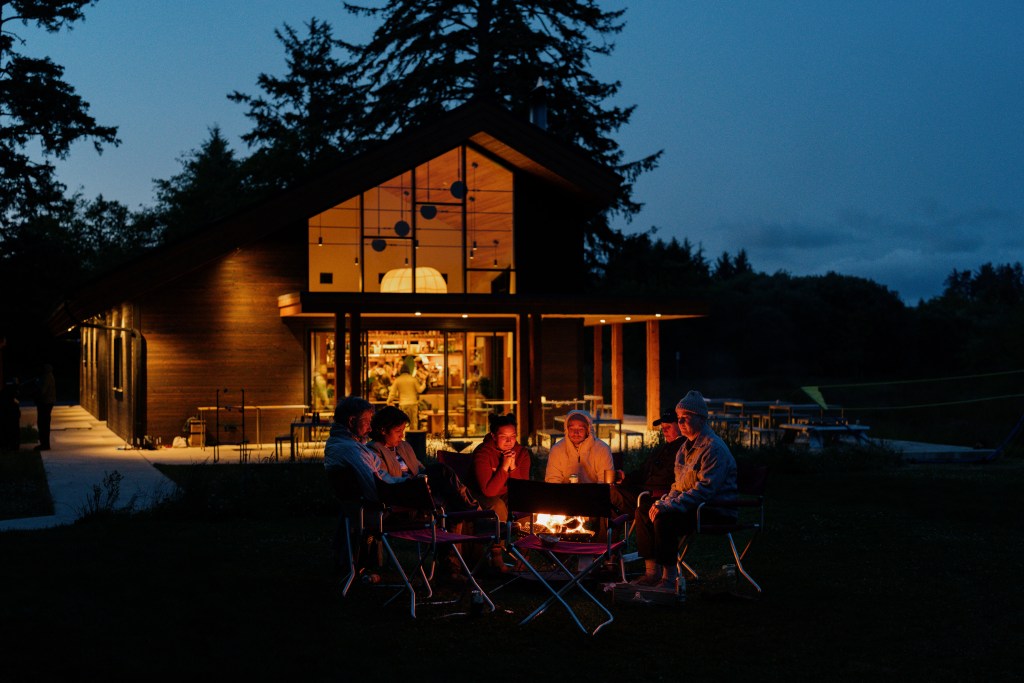
Kids. They’re everywhere! That’s perhaps the first thing you notice when you enter Snow Peak Campfield in Long Beach, Washington. This location is just a stone’s throw from the ocean, on the site of a former RV campground. But even so, you’re camping on a restored wetland; on a misty, drizzly morning, you can smell the moisture clinging to the old-growth Sitka spruce and western red cedar.
As for the children sprinting around, making instant cliques and devising impromptu games in the store-coffee shop-community living room, they’re the ice breakers of the 25-acre site. Here, you’ll find lovely Jyubako cabins and tent lots where you can rent Snow Peak tents, pads, sleeping bags and cooking gear—or bring your own gear and just rent your site.
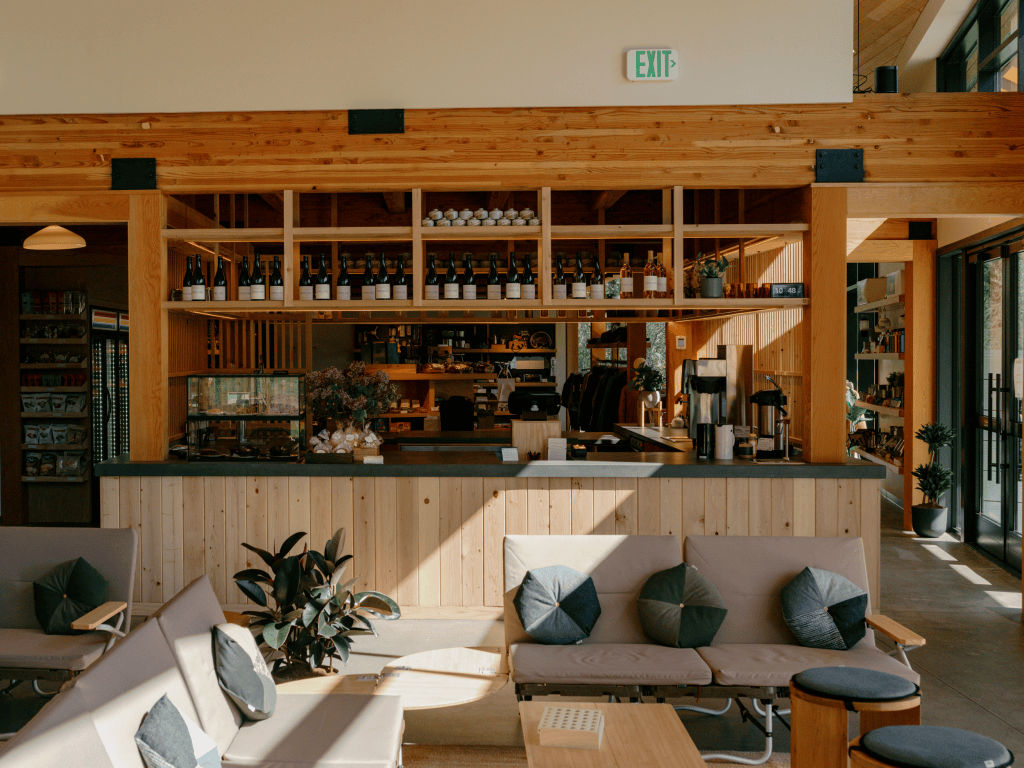
Snow Peak’s first Campfield in the U.S. (they operate more than a dozen in Japan) incorporates influences from their home country, but according to Josh Clouser, New Ventures Project Manager, the goal was to merge a Western and Eastern ethos with a nearly Scandinavian minimalism. The first step in that idea was getting campers out of their cars—and far away from them.
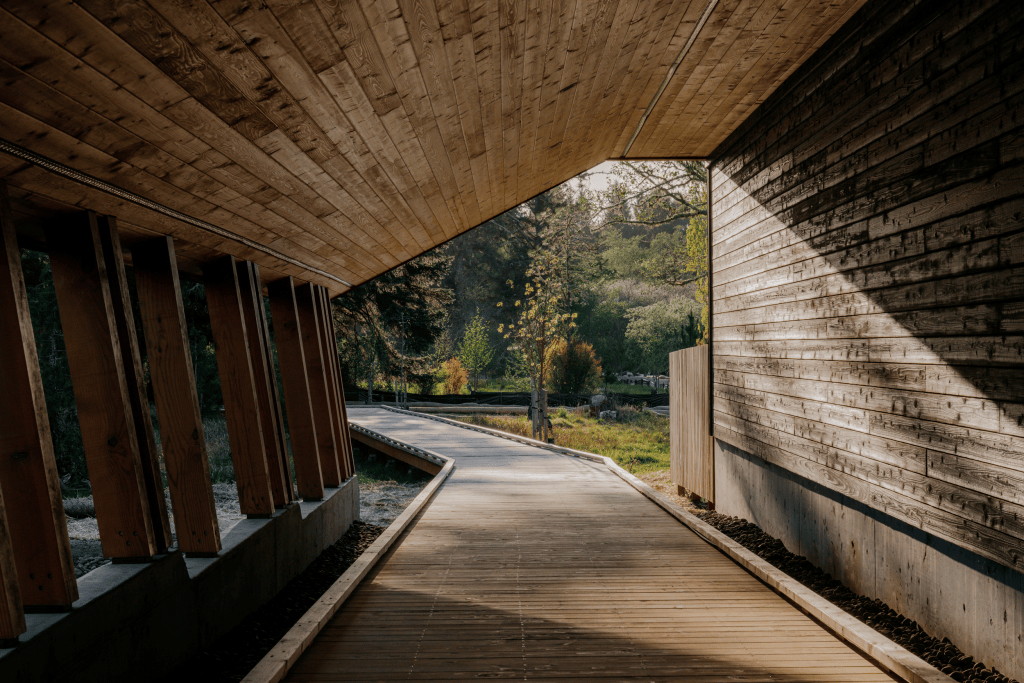
That experience greatly influences the vibe. You park, grab a rugged cart for your luggage, coolers and other gear, and enter Campfield through a gate. “To us, it’s very much a kind of Alice-in-Wonderland tunnel experience,” Clouser explains, where the idea is to divorce you from your car and join another world.
It’s a subtle nod to the experience you might have in Japan of visiting a Shinto temple. These are ubiquitous there, but what you’ll find even in the scrum of Tokyo is that going to the tiniest temple removes you, physically, from your surroundings.
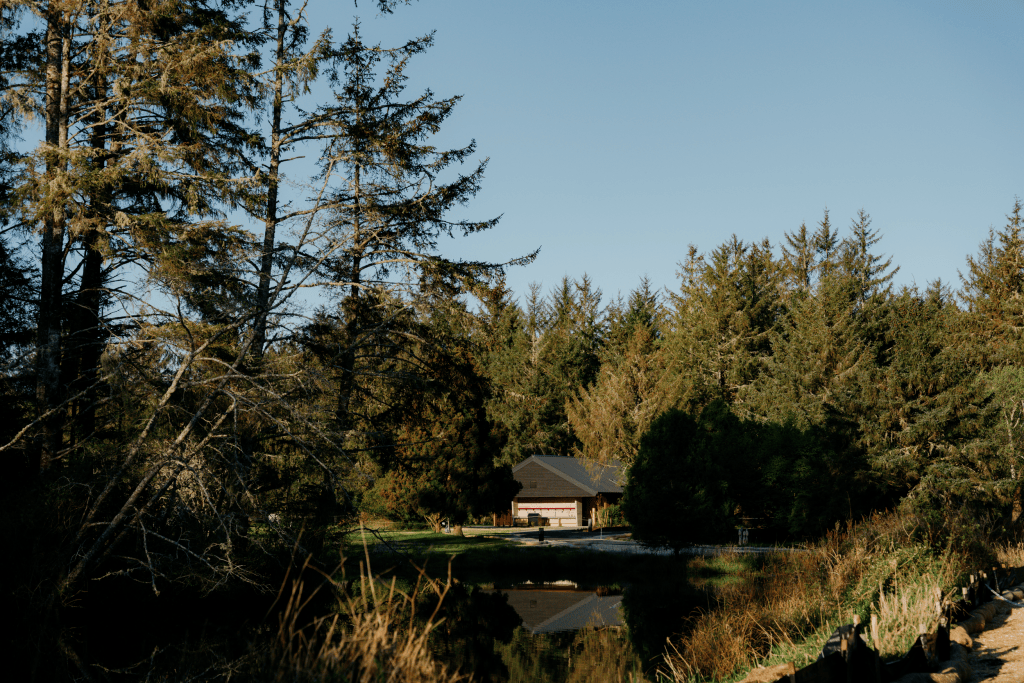
At Campfield, this vortex is aided by a gently sloping ramp from the gate. By the time you’re on the campground, the pavement is long gone and you’re surrounded by green. Clouser says that’s also immensely freeing for children because their parents know the danger of cars is very far removed and kids feel this innately. Their parents might take a beat to figure that out, but during our stay we witnessed, countless times, adult strangers meeting each other by introduction from their children and quickly becoming friends themselves.
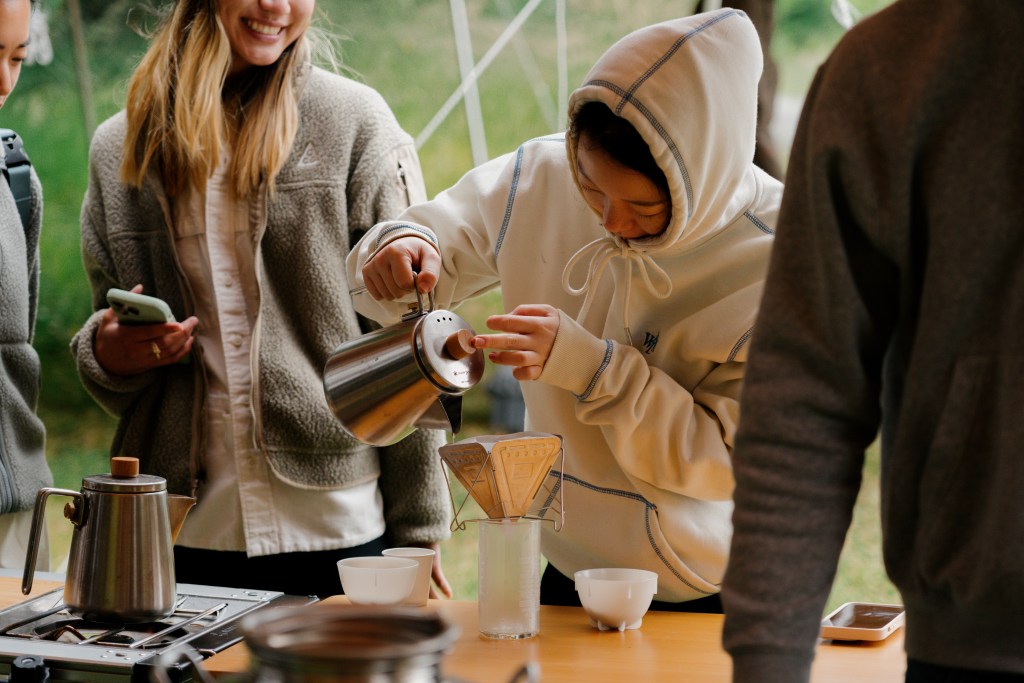
It also helps that cooking is an outdoor experience, with, as Clouser explains, sites arranged with their fire pits and grilling locations facing each other, so you can’t help but smell what’s cooking on the neighbor’s grate and make eye contact. During our stay we witnessed campers constructing elaborate, multi-course meals—taking advantage of abundant local produce and seafood—and trading bites with neighboring campers.
Rather brilliantly, Campfield sands off some of the rough edges of sleeping outdoors. There’s a Wash House, with private, unisex bathrooms and showers, and sinks set up for cleaning up your dirty dishes, so you don’t have to sweat that process.
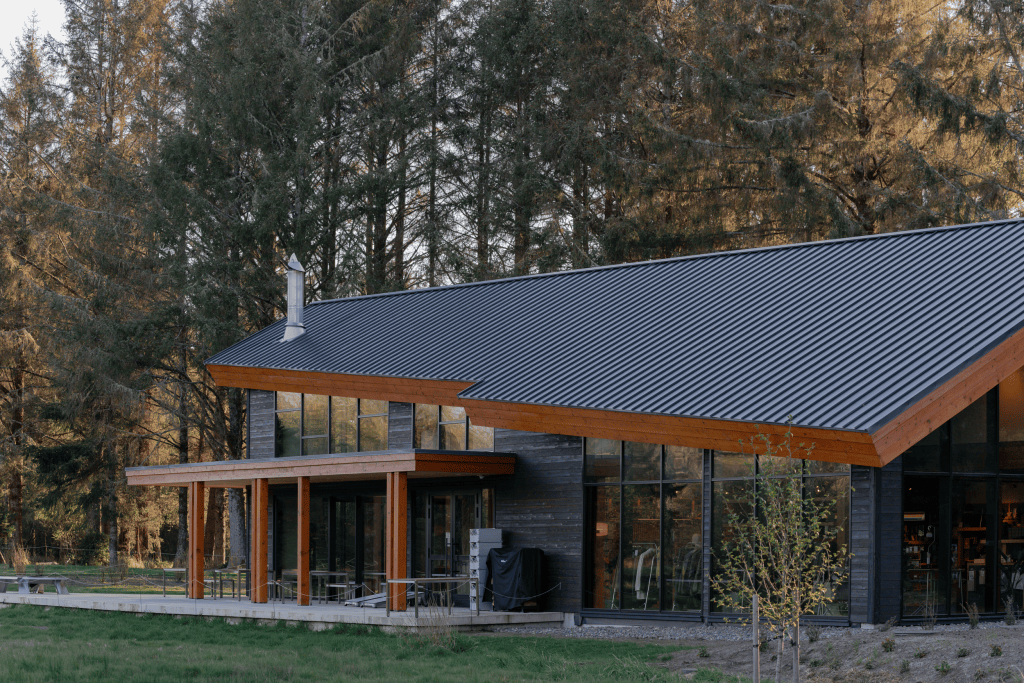
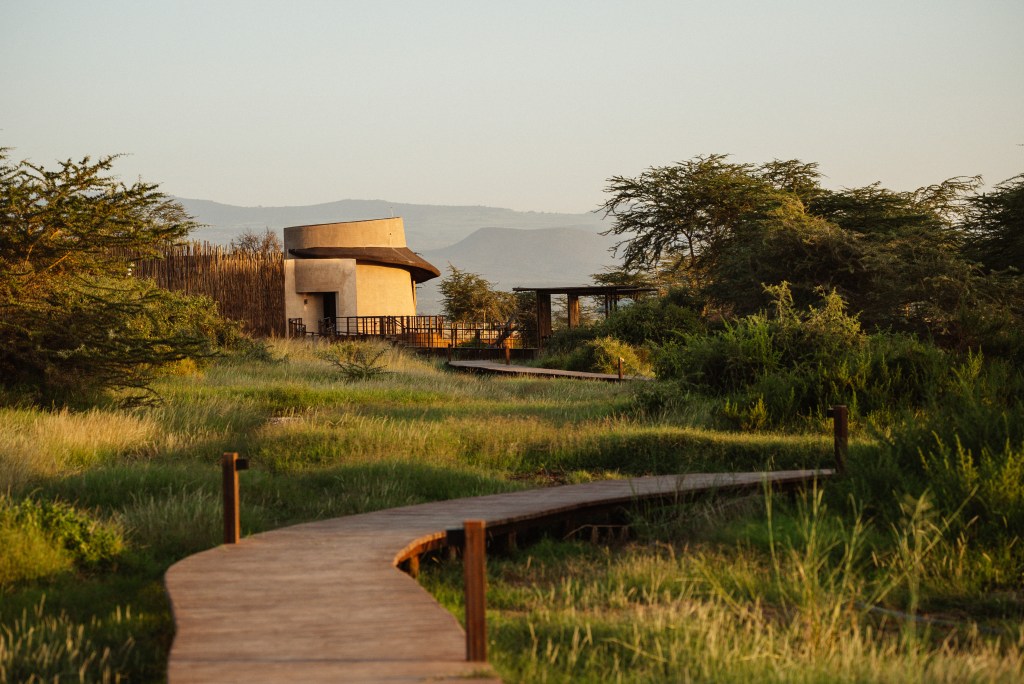
Architecturally, Campfield is a joy to experience. Stare at a canted roofline, the bend of a concrete wall, the joinery that overlaps in stacked patterns rather than straight butts or the patterned framing as the light cuts through a structure and you’re seeing very deliberate execution. Snow Peak Campfield harnesses the mastery of Kengo Kuma & Associates, the same firm Snow Peak commissioned for its sites in Japan, but used local builders to execute the plan.
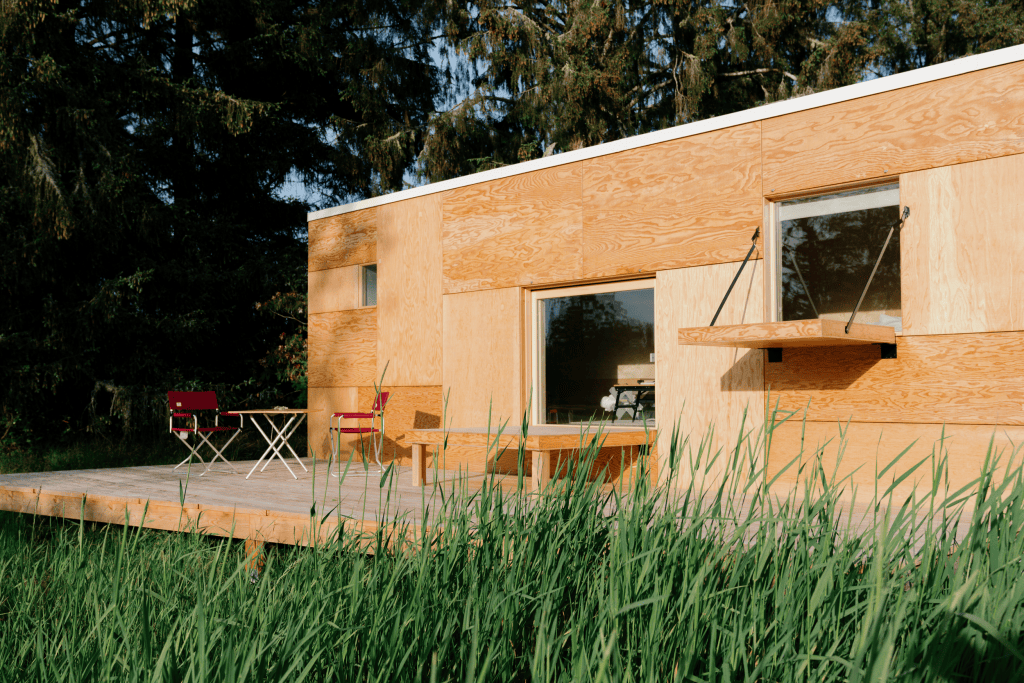
You’ll witness both that artistry and intentional aesthetic in the Jyubako Suites (which translates roughly as “living box”). These small cabins, about the size of a small RV, are perfect for a couple. Staying this way puts you slightly less in touch with nature, but Clouser notes that the way they’re built, with bright, barely polished pine walls and low windows encourages both privacy and leaving your nest to encounter more of the world. In the central living space there’s a low table. Sit on the floor, Japanese style, and your eyes are level with the eyebrow line of the small glass door that opens onto a porch—you’re practically sucked out through that door, to get closer to what lies beyond the cabin walls.
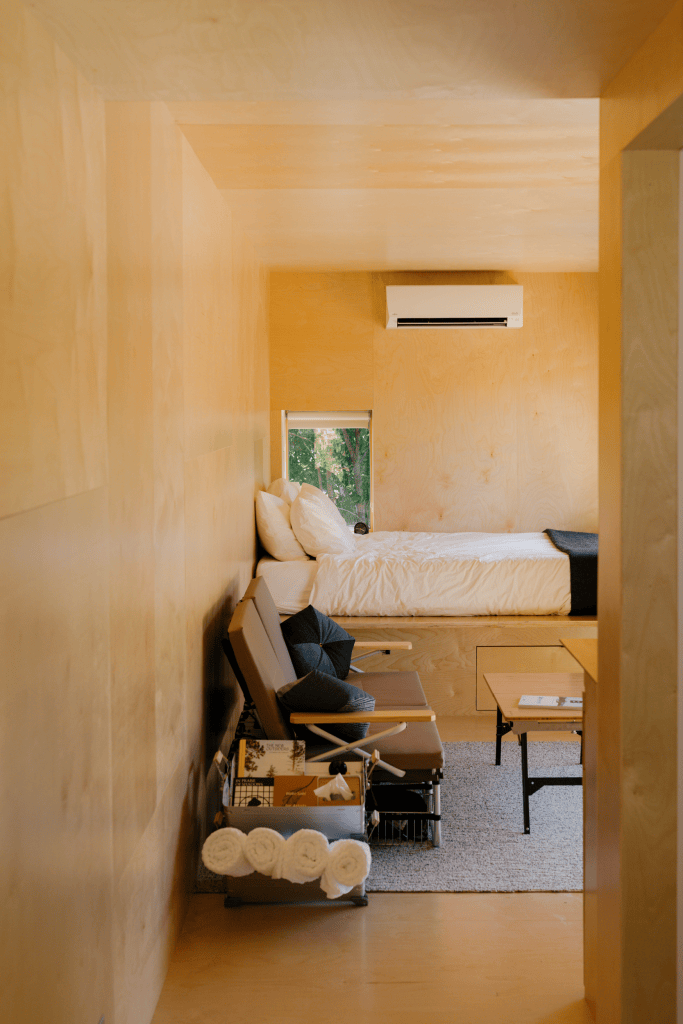
The Jyubako also includes amenities like a mini-fridge, a stovetop and a stock of dishes, cutlery and basic cooking utensils, as well as a private bathroom and shower. Lots of families with toddlers seemed to favor Jyubakos, just to eliminate the fluster of managing little tykes without mod-cons.
Regardless of sleeping accommodation, all campers are clearly staying here to take advantage of the Ofuro Spa. This isn’t really an ofuro, which just translates as a bath, but it’s also not what the Japanese call an onsen, which is more like a hot-spring-fed, resort-style experience. If anything, the Ofuro at Campfield is more like a very luxurious Sento, a public bathhouse that typically has multiple temperatures of baths, sometimes a steam room and often a cold plunge.
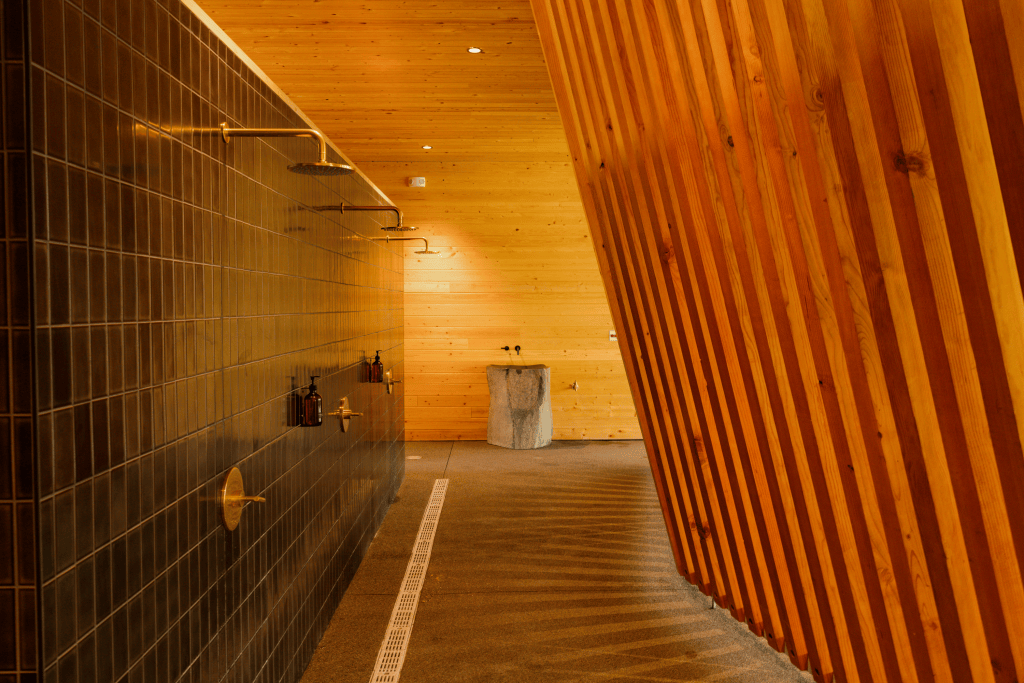
At Campfield, the Ofuro consists of an oversized soaking tub, a cold plunge and an appropriately hot (as in, very) sauna. Clouser notes that the goal, again, isn’t to mimic anything specifically Japanese, but to properly tip their hat to the ethos of Snow Peak. Entering the spa, you face a large black wood wall with pegs for clothing and shelves for outerwear, and there are showers for cleaning up before entering the community setting.
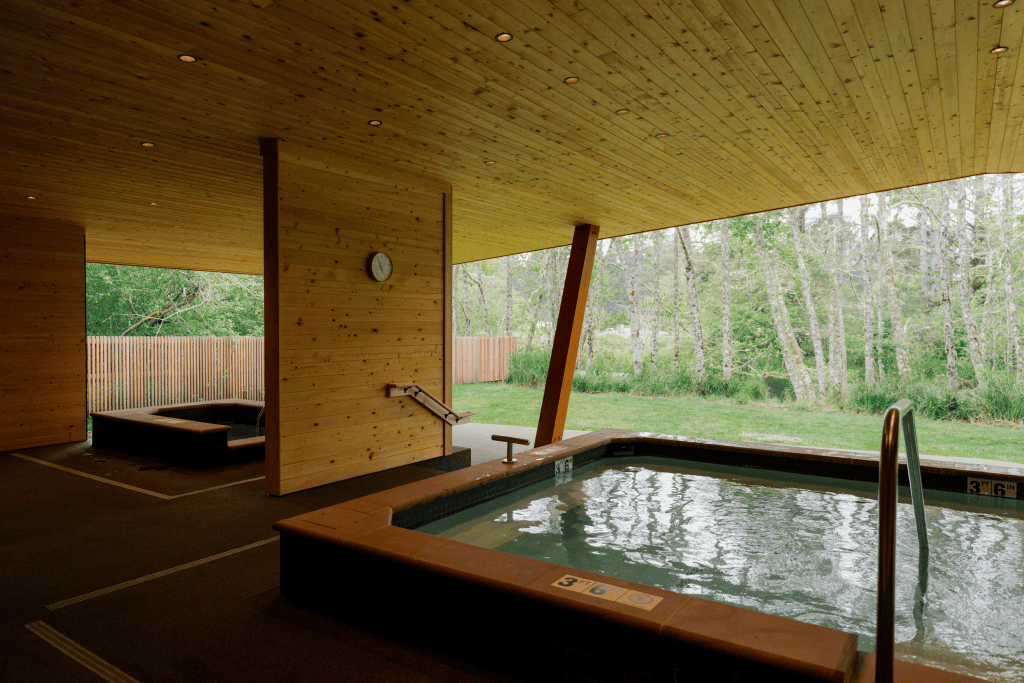
But the Ofuro doesn’t “happen” until you gaze around that wall. Then, very suddenly, like with the ramped entrance to Campfield, you enter another kind of Wonderland. Here, the massive soaking tub faces a mossy, light-green forest of quaking aspen, and it’s just you, your friends—or your new Campfield friends—and nature. Clouser says the beam structure that soars above the floorpan was designed specifically to echo the arching bows of the trees beyond.
Step into the Ofuro, drop into that hot bath and on a typical Pacific Northwest day (meaning cool and foggy), you could easily imagine you’ve been transported. Not to Alice’s netherworld, but indeed, to Snow Peak’s home: Japan.


What are your thoughts?