Specialized Keeps Digitizing the Commuter e-Bicycle
The Vado 3 EVO is like a two-wheeled wearable

Specialized Bikes has never worked more closely with its Silicon Valley peers than right now. You might see proximity alone as the cause, since Specialized is based in San Jose, so there’s an obvious mingling between geeks and engineers bleeding between the bike world and the tech sphere. And if you think of Silicon Valley titans like Apple and Google, and their ever-intensifying focus on fitness and health, and tech peeps’ general notion of quantification and self-improvement, that’s also very much Specialized’s M.O.
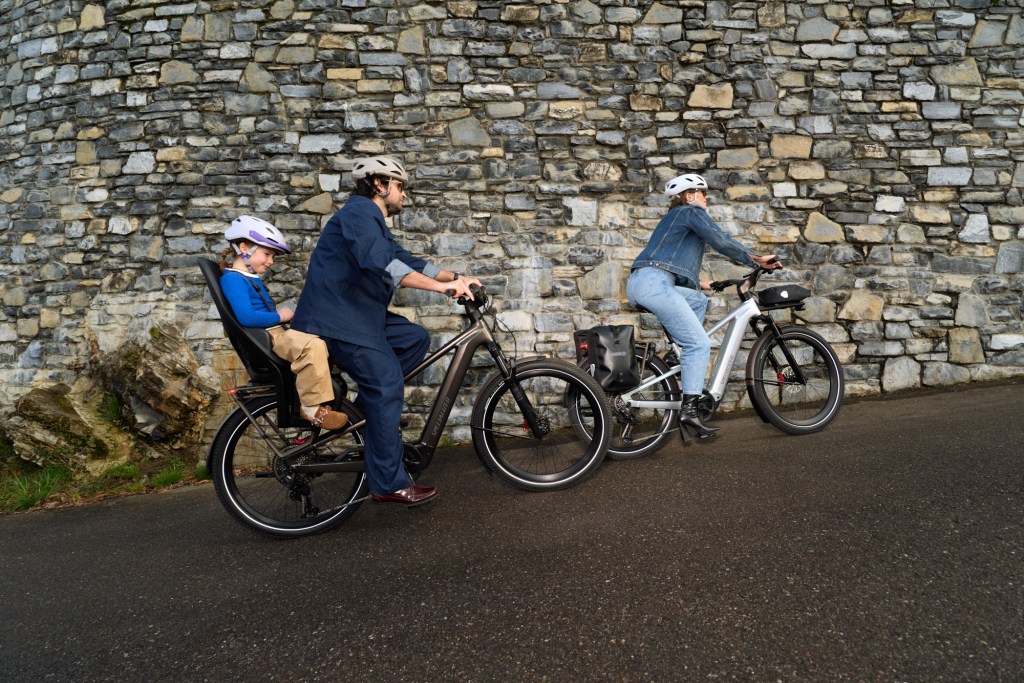
But broaden out, beyond the very thin profit margins of competitive cycling, to the world of fitness, and you can see why Specialized cares a lot about bike commuters. It’s a bigger customer pool. And bike commuters are no less likely to be fitness focused; they’re just less likely to don spandex to spin to the office, farmers market or to the pre-school to fetch their kid.
Which is where the Vado 3 EVO, which has just debuted in multiple price tiers, enters the picture. None of these new high-tech commuter bikes, ranging between $4,500 to $7,000, is cheap compared with lower-cost commuter e-bikes. But Specialized is emphasizing that their tech, Body Geometry fit (more on that, below), and unique integration with Apple and Garmin make the one-stop-shop platform more rider friendly for buyers who want to merge fitness and electronically aided commuting. And from our recent test ride, we can honestly say that the experience is a special one.
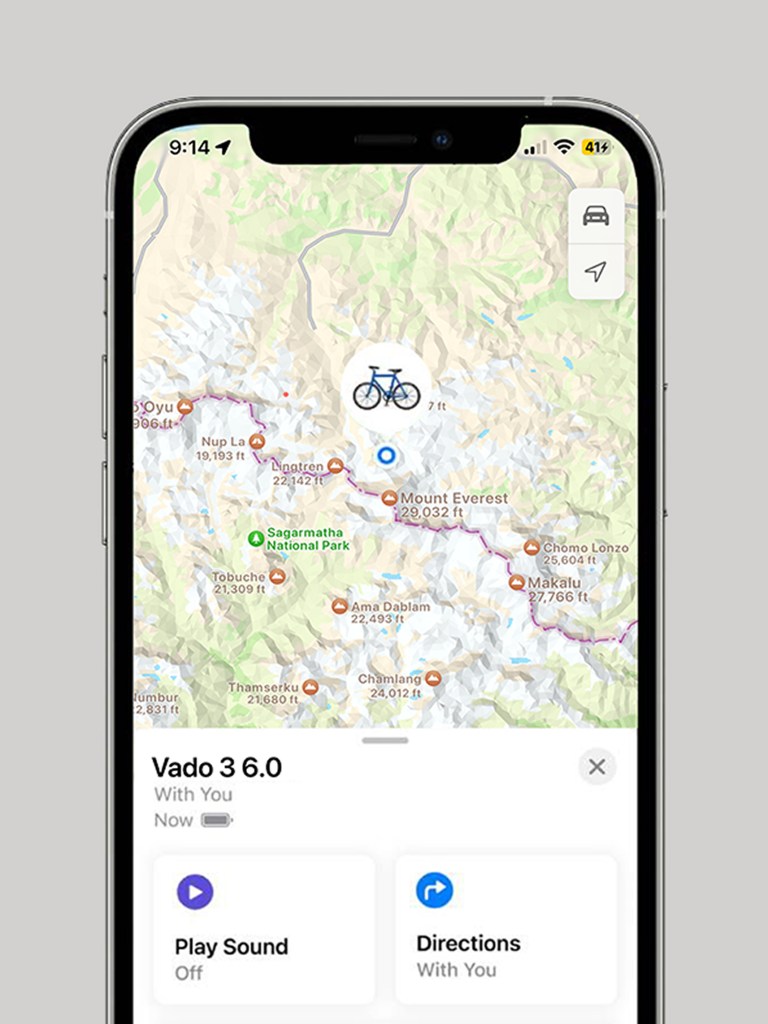
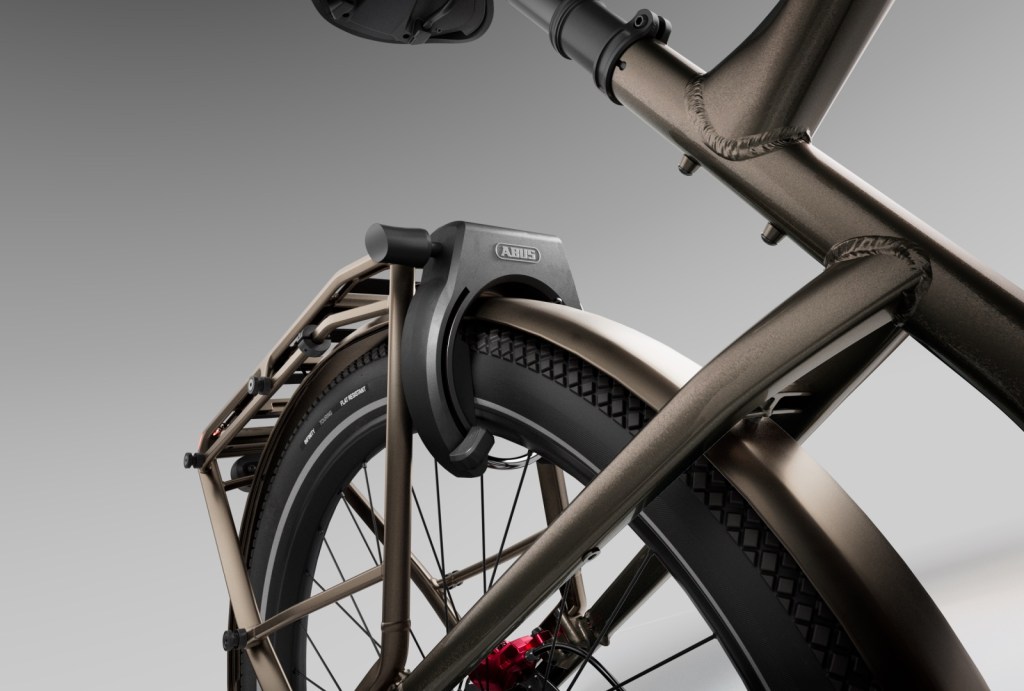
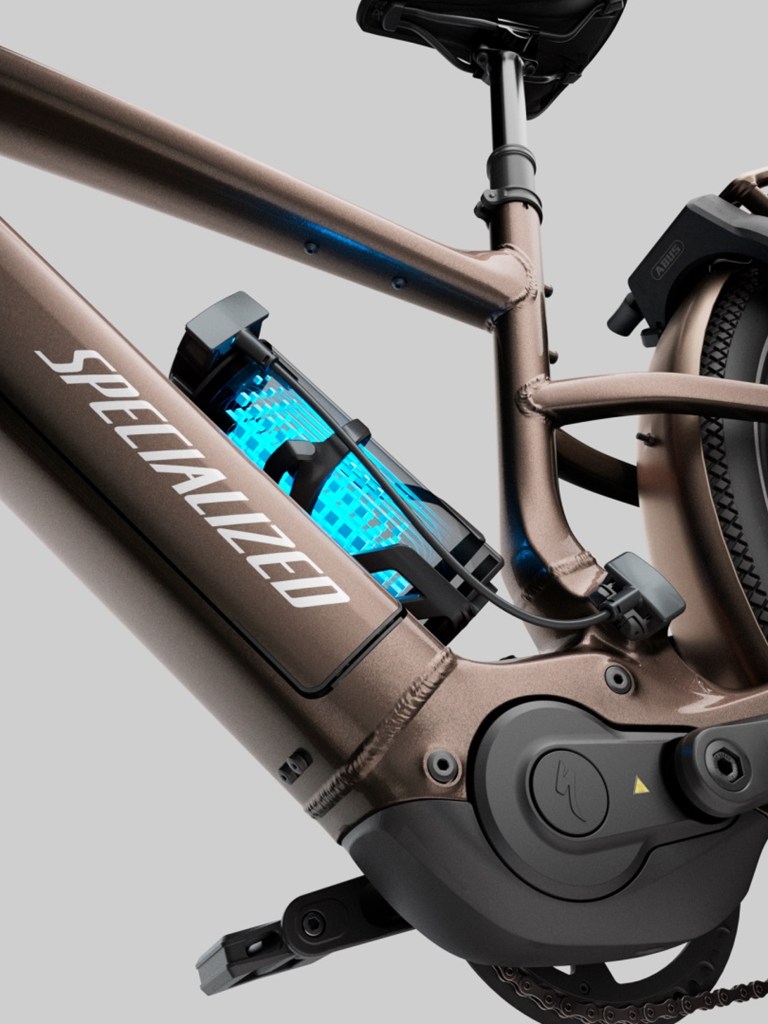
First off, on the most expensive $7,000 Vado 3 EVO 6.0, you’re getting all kinds of technology. That includes Apple’s Find My integration, so that if your bike is swiped it shows up on your iPhone as a missing object. As with Find My for other devices, if a thief rips you off, you’ll receive a notification and could alert the cops for tracking. The bike has its own proximity lock and alarm, however, and locks the battery within the down tube. Specialized also eliminated the need to carry a key for the integrated rear wheel lock. Instead, you just swing that bar through the spokes of the back wheel and walk away. When you return, punch in a personal code on the touchscreen to unlock the bike and disable the alarm.
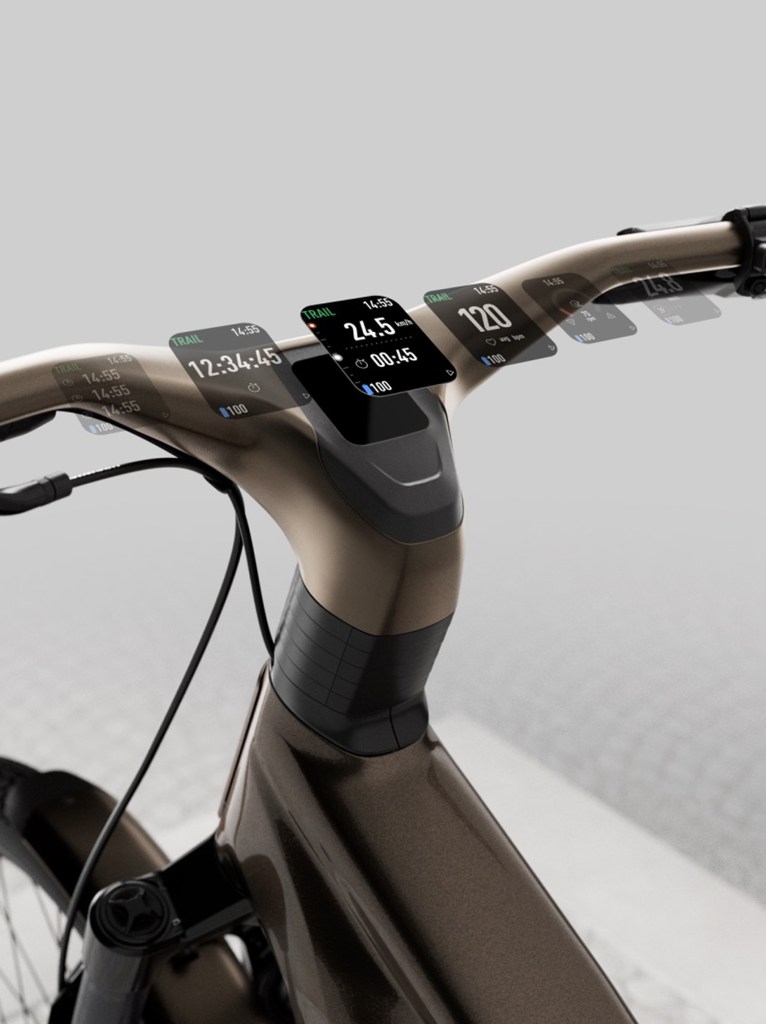
The tech goes way beyond security. During our test ride in New York’s Central Park, that same display fed back the ideal cadence, with a color index on the screen, coaxing toward spinning at a higher speed rather than mashing the pedals. There are a few reasons for this. Spinning is more efficient for humans than pushing slowly, and the Vado 3 EVO’s powertrain isn’t only quieter and more powerful—with a whopping 105 Nm of torque, which is more than 50-percent more mojo than Vado 2 offered—it’s also tuned for ultra-smooth delivery when the rider spins consistently. Doing so is also the most range-efficient way to utilize the bike’s battery output. By the way, the touchscreen also shows the split between your own wattage contribution and the Vado 3’s. Pair an Apple Watch with the Vado 3 EVO and it can show both your pedaling output and the bike’s as well as your heart rate. Start and end a ride on Specialized’s app on your Apple Watch and all your metrics populate Apple’s Health app, or if you like, a fitness app such as Strava.
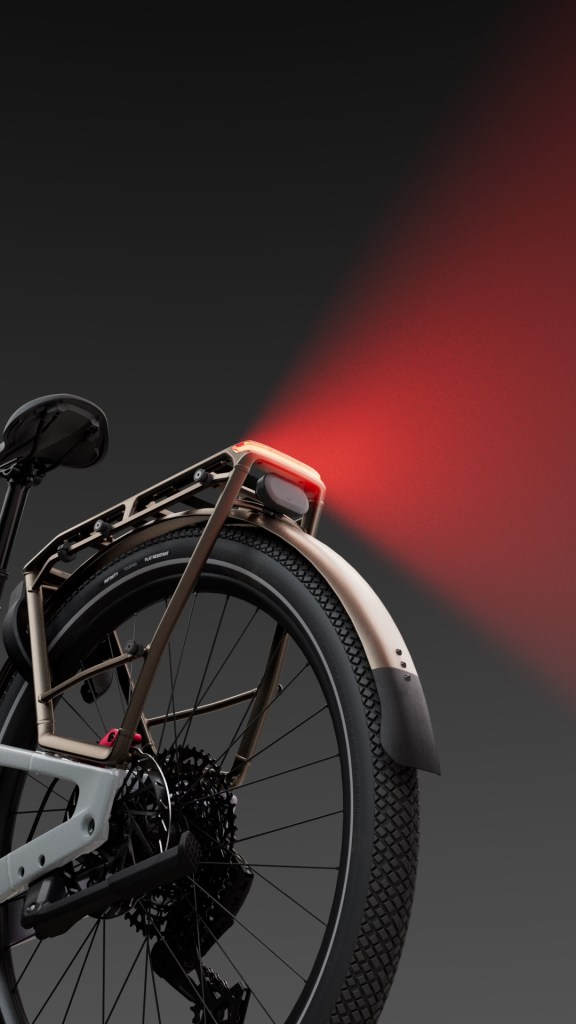
For safety, the 6.0 Vado integrates with Garmin’s radar system that detects traffic around the bike. That shows cars as icons on the screen and their approach speed behind you, which is useful whenever your commute takes you into urban zones vs. dedicated bike paths. And they include both a tail lamp with integrated brake light and a low- and high-beam head lamp, so you don’t have to blind other commuters on the bike path but will definitely have coverage if your commute includes plying darker roadways.
Specialized adds another handy feature: a integrated phone mount on the handlebar (if you have a compatible Quad lock phone case) with built-in wireless charging. And if you don’t want to roll with a Quad lock case, there’s also a handy USB-C port beneath that display.
Speaking of charging, Specialized is also focused on faster refueling, which is a category rarity. The 6.0 comes with an ultra-fast charger that can refuel the battery from 0 to 80% in an hour. (Most e-bikes will take several hours to recharge.) You may never need that capability, however, since Specialized testing has shown a range of up to 93 miles between charges. However, if you’re using your Vado 3 EVO as a grocery carter, and since this bike is also compatible with trailers and Specialized redesigned a rear rack to withstand up to a whopping 107 pounds, your range may be more like 50 or 60 miles. That’s still great, but there’s an obvious scenario where a lot of e-bikers will want fast charging—when the dreaded “I-forgot-to-charge-it!” realization that hits you over your morning coffee.
All that tech might be pointless if the Vado 3 EVO 6.0 wasn’t a joy to pilot, but it is. Specialized made some very smart updates compared to alternative commuter rigs, like integrating the powering of wireless shifting. Yes, electronic transmissions are cool, but dead batteries that drive them stink. Here, that will never happen. Specialized also slackened the entire cockpit after careful study of over 7,000 riders and their postures, so you sit more upright (like a classic “Dutch” commuter bike), for better in-city vision, plus happier hip and lower back muscles.
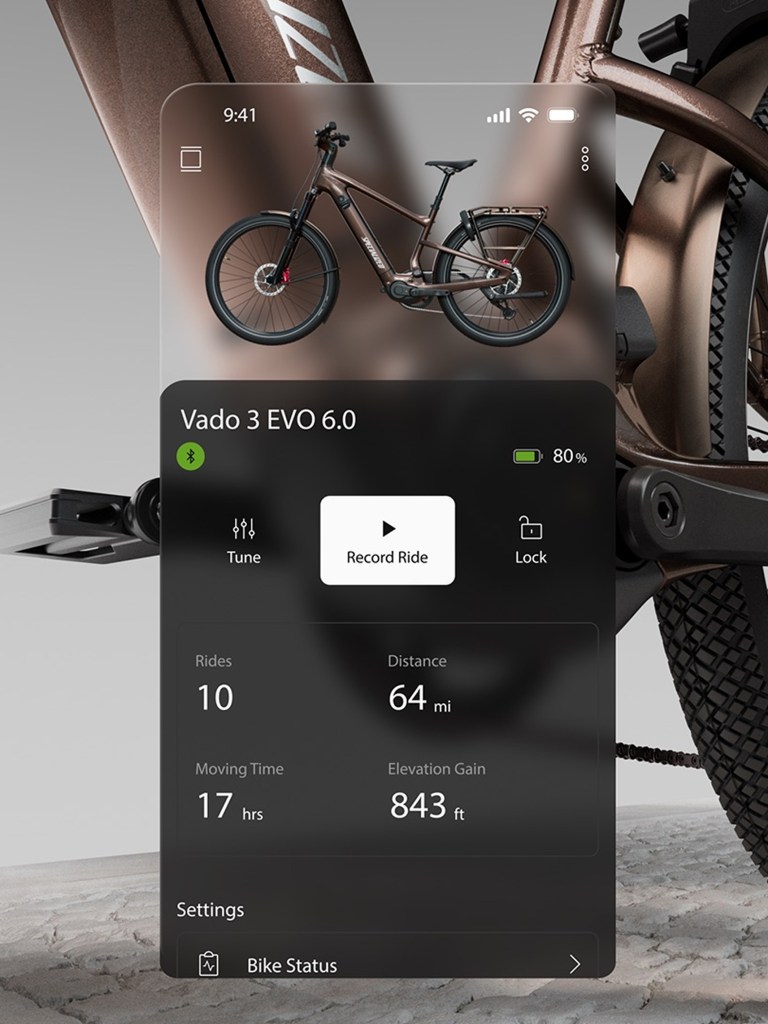
As for the powertrain itself, Specialized gives riders multiple assist modes, including an automated one that eliminates the need to worry about how much boost you’re getting and multiple pre-sets you can access via a toggle switch by the lefthand grip. But you can also fine-tune each of these via Specialized’s own app, which pairs with the bike, and you can also port over an entire ride route, so the bike “knows” where you intend to ride and how much battery you’ll need to go the distance.
There’s one relatively lo-fi add to the Vado 3.0, however, that says a lot about Specialized as a brand. It’s a dropper seatpost. That’s a lever you push when you come to a stop that lowers the entire seat closer to the pavement. In turn, that lets you plant your feet squarely on the ground. Do that at every red light and you can more easily balance the bike and any payload you’re towing, or that toddler in the seat on the rack behind you. Then when the stoplight turns green, start pedaling and you’re assisted by that robust 105 Nm of torque. Hit the dropper post again to elevate the seatpost and off you roll.
That’s a clever “hack” that comes out of Specialized’s mountain biking quiver. It shows the advantages of buying from a company that sells every kind of bicycle, that’s fueled by experts from all walks of life and levels of expertise, from hard core Silicon Valley folks, to uber-nerdy cyclists.










What are your thoughts?