Tom Sachs Takes the Demerit
The first NikeCraft General Purpose Shoe in leather is named for the trouble Sachs got into at boarding school
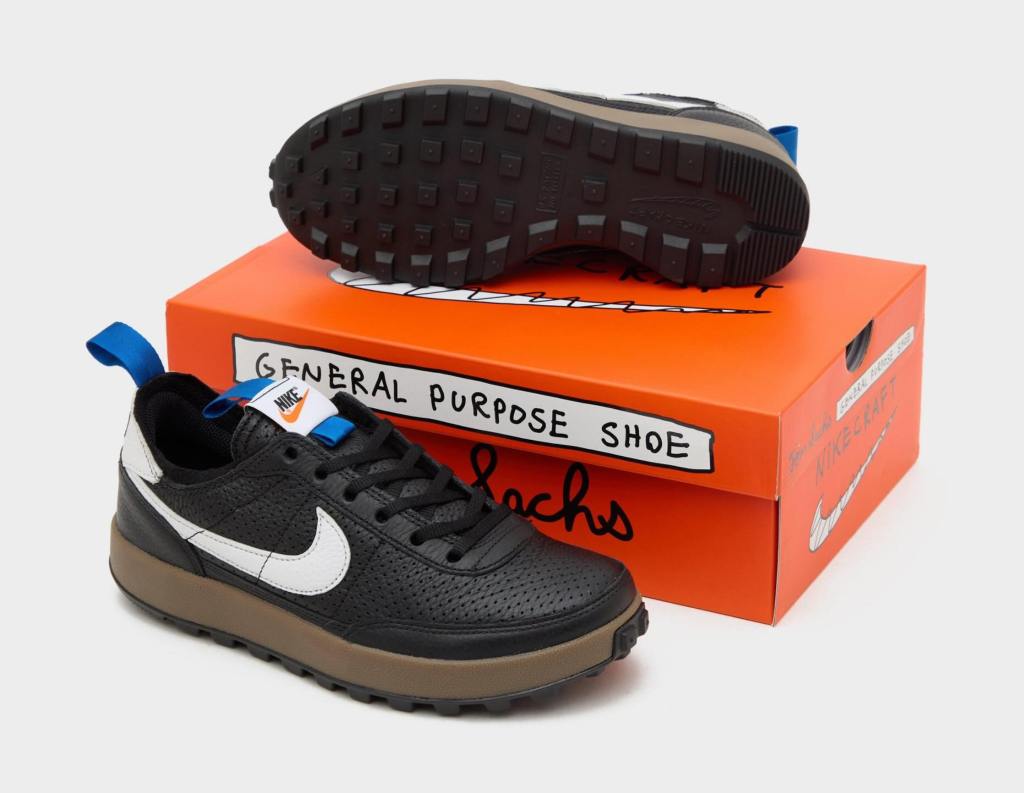
Tom Sachs’s boarding school required dress shoes, and Sachs wanted to wear soccer shoes to class. His fix was a marker, colored over the logo until the sneaker could pass for something more formal. The school still caught on often enough to hand him demerits and bring him close to expulsion. That penalty now names his latest shoe with Nike.
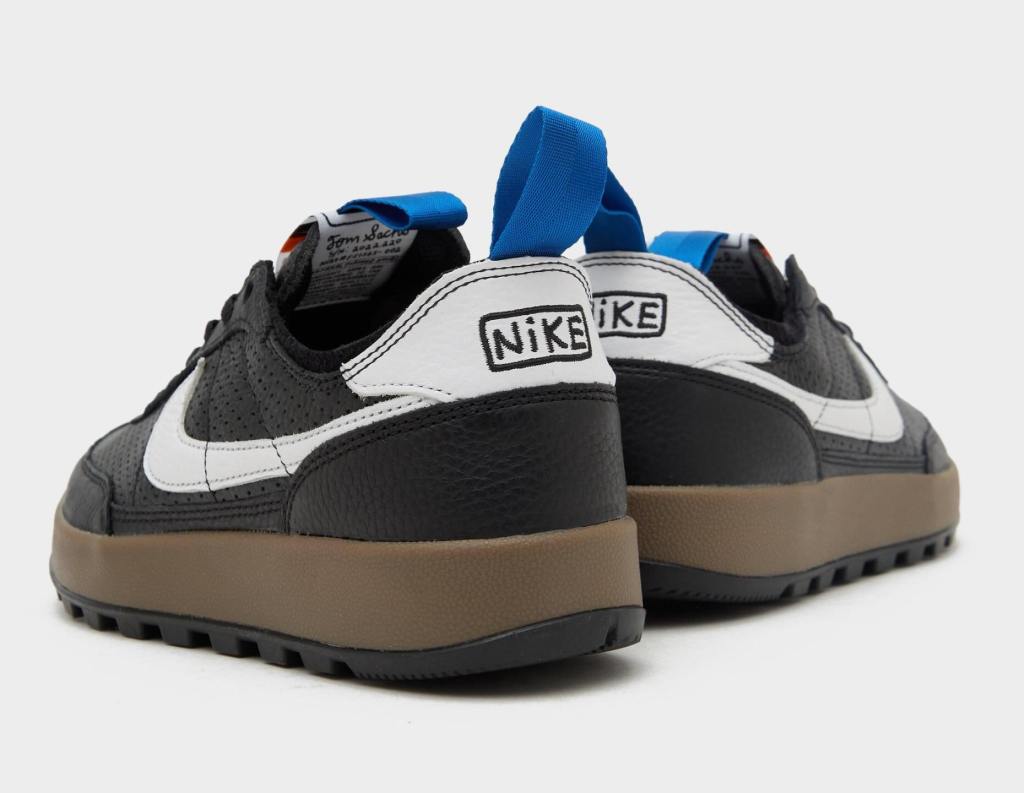
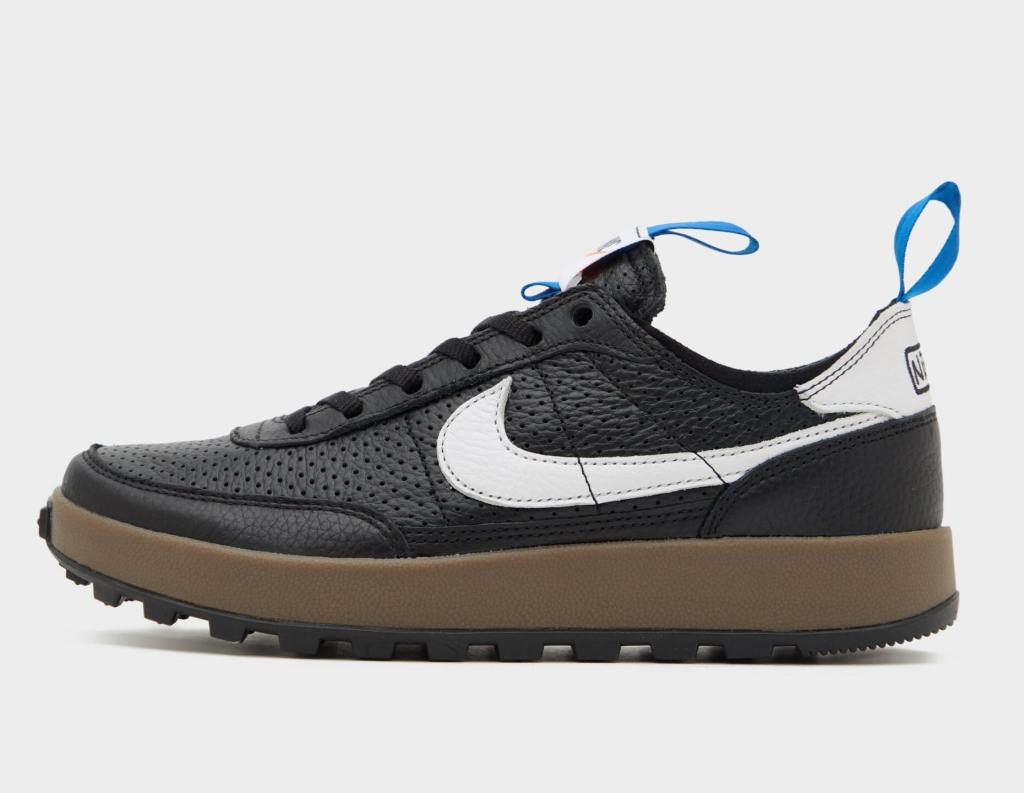
The NikeCraft General Purpose Shoe, or GPS, is the everyday piece of a partnership that has run more than 10 years, a do-everything design with a knit upper and a waffle sole. “Demerit” is its first premium version, with a perforated ECCO Leather upper in black over that same sole, which Sachs traces to Nike’s running history, and blue pull tabs cut from the nylon used in automotive seat belts. He calls it another iteration of a tool.
The story behind the name is what makes this release personal for him. NikeCraft has always worked in a loop of making, testing, learning and refining. The Mars Yard, where the sequence started, was built for engineers and scientists at NASA’s Jet Propulsion Laboratory in Pasadena from materials derived from the rover program, and the GPS applied the same thinking to daily life. Demerit carries the lesson Sachs took from school: break a rule when you believe there is a better way, then accept the consequence and wear the experience with pride.
We asked Sachs about the marker, the leather and where the experiment goes next.
COOL HUNTING: Walk us through the shoe you altered at boarding school. What did you do to it, what rule were you breaking and when did you realize that was a design philosophy and not a teenage stunt?
Tom Sachs: I was supposed to wear dress shoes at school, and I wanted to wear soccer shoes. The insignia made it too obviously a sneaker, so I took a marker and colored in the logo so the shoe would pass as a dress shoe, all to avoid getting a demerit.
I didn’t think much of it at the time. It was a total instinctual thing. I had a problem and I figured out how to make it work. Sometimes that means breaking the rule and accepting the consequences. The Demerit is about that: testing limits, taking the penalty and wearing the experience with pride.

CH: The GPS was built as an accessible, do-everything shoe. What made now the moment for a premium black leather version, and what did leather change about how the shoe is built and how it wears in?
TS: NikeCraft has always been about testing and refinement. The GPS is an everyday tool, and the Demerit is another iteration of that tool. The big change is the material. This is the first GPS with a perforated ECCO Leather upper instead of the usual knit upper. The leather makes it much more substantial. But the fundamental principles haven’t changed: utility, durability and craftsmanship. It still has the waffle sole rooted in Nike’s running history, and the blue pull tabs are made from the same nylon used in high-performance automotive seat belts. Every material has a job.
CH: The Mars Yard was designed for a specific person doing a specific job, a scientist on the field at NASA’s Jet Propulsion Lab. The GPS is designed for everyone doing everything. Which brief is harder to design for, and what carried over from one shoe to the other?
TS: They’re different problems, but the process is the same. The Mars Yard started with a very specific user, the engineers and scientists at NASA’s Jet Propulsion Laboratory who worked in the Mars Yard—the synthetic Mars environment in Pasadena—and the upper was originally made of materials derived from the Mars rover program. The shoe was designed to serve those scientists.
The GPS takes that same idea of the shoe as a tool and applies it to everyday life. It’s not supposed to be a fashion object. It’s something you use. What carries through all of NikeCraft is that emphasis on utility, durability and craftsmanship, and the idea that you make something, test it, learn from it and refine it. This shoe is designed for your everyday adventures.

CH: Every GPS drop has a name and a reference. What sets this one apart for you personally, and how do you decide when a story is strong enough to earn a shoe?
TS: This one is personal because the name comes from something I actually did. I got in trouble for wearing the wrong shoes to school, and my solution was to modify them with a marker so I could keep wearing them. The story stuck because it’s about more than a shoe. It’s about rules and what happens when you test them. Sometimes you break a rule because you think there’s a better way to do something. Sometimes you get a demerit. You accept it, learn from it and keep going. That’s what the name means to me.
CH: Ten-plus years with Nike, a brand you once defied with your sneakers. What’s the thing you still want to make together that you haven’t been able to yet?
I don’t think of NikeCraft as something with a final destination. The whole practice is based on experimentation and continual refinement. You make an object, you test it, you find out what works and what doesn’t, and then you make the next one.
We’ve gone from the Mars Yard to the Mars Yard 2.0 and 3.0, and then to the General Purpose Shoe and now the Demerit. Each one is another experiment. So for me, the interesting thing isn’t necessarily one object we haven’t made yet. It’s seeing what we learn from this one and where that takes us next.





What are your thoughts?